
计网作业1
Question
(a) What the packet traces tell you about the initial fetch of the http version of the page?
(b) What the “-L” flag does and why it is useful here?
(c) Anything else interesting that you have seen.
(a) From the packet trace, I can see the client(172.22.54.16) establishes a TCP connection to the web server(45.76.35.230) on port 80. The three-way handshake (SYN, SYN-ACK, ACK) occurs, followed by an HTTP GET request. Then the server responds with “HTTP/1.1 301 Moved Permanently”, which is a redirection response status code indicates that the request resourse has been permanently moved to the URL in the Location header: “Location: https://tcpdynamics.uk/“. Finally, both the server and client gracefully terminate the connection with the “four-way handshake”.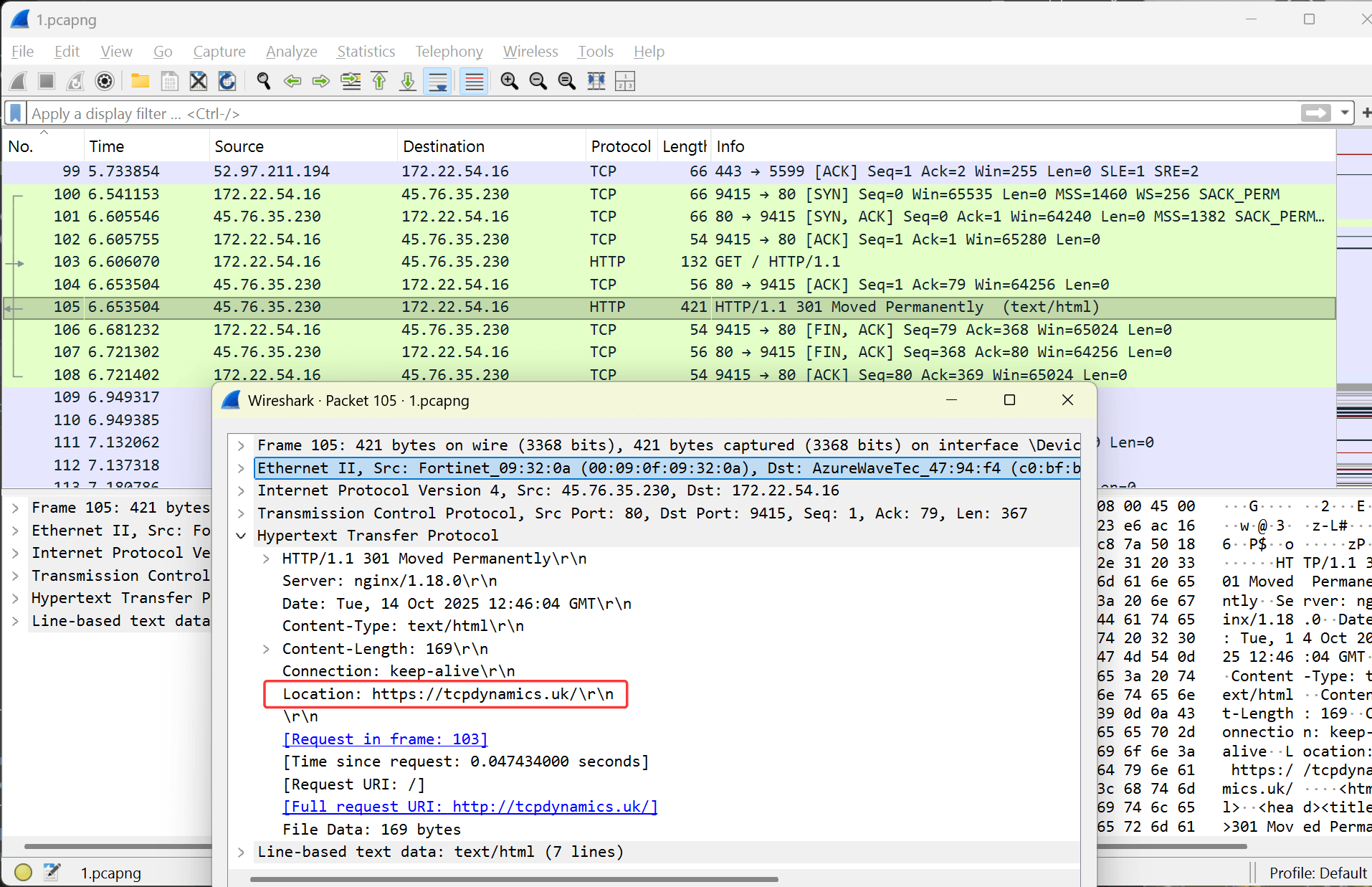
(b) The -L flag allows curl to follow the redirects automatically, as the curl --help all shows. It ensures that curl follows the redirection specified in the response, in order to fetch the actual web page content at the secure address.
(c) I also see some DNS and ARP packets in the list and knows how they work. DNS resolves the domain name to its IP address and ARP resolves the MAC address. Besides, by expanding the packet layers in Wireshark, I knows the structures and details of each captured frame.